
The Best Benefits Plans Aren't Built at Renewal Time

For many organizations, benefits become a once-a-year conversation. Renewal approaches, reports are reviewed, costs are discussed, decisions are made, and the topic is largely set aside until the following year. But employees don't experience life once a year. They experience challenges, milestones, stressors, and changes every day.
The strongest benefits strategies aren't built during renewal season. They're shaped through ongoing conversations and a continuous understanding of employee needs.
Why Benefits Plans Need Room to Adapt
Employees Don't Live in Annual Planning Cycles
The needs of your employees can change dramatically over the course of a year. For example, a new parent may join your team mid-year, or employees may begin caring for aging parents for the first time. Mental health concerns might be higher during certain times of the year, such as during periods of high workload or even during the holiday season. Ever increasing economic pressures also create increased financial stress that only seems to be worsening for many people. Major organizational changes can also impact wellbeing, especially as workforce demographics shift. None of these changes wait for renewal season. Neither can your benefits plan.
Today's Workforce May Not Be Tomorrow's Workforce
The makeup, and therefore the needs, of your workforce are constantly changing. A benefits plan that was highly effective three years ago may no longer reflect the realities employees face today.
Factors that influence workforce planning include growth or downsizing, generational shifts, changes in employee demographics, hybrid or remote work, health and wellness trends, and economic conditions. When these changes happen, everything else changes, including support needs and conversations. Your benefits should too.
Flexibility Creates Better Outcomes
Organizations don't need to redesign their benefits plan every year, but they do need to remain open to learning and adjusting because flexibility creates better outcomes. The best plans are responsive to changing needs, including improving communication, introducing new benefits and support programs, enhancing flexibility, addressing emerging workforce challenges and shifting resources to what employees value most. That’s what true support looks like.
The Most Valuable Insights Come From Ongoing Conversations
Organizations often gather employee feedback during annual reviews or engagement surveys, renewal discussions, or benefits enrollment periods. However, though an annual utilization report may tell you whether counselling claims have increased, if virtual care usage is rising or if employees aren’t using a particular benefit - what it doesn’t tell you is why.
Listening shouldn’t be an annual exercise. Meaningful insights often emerge throughout the year. Ongoing conversations help organizations understand emerging challenges, barriers to access, employee perceptions, areas of confusion and gaps in support.
Employers need to understand what employees are experiencing in real time. There are many ways to stay connected with your employees throughout the year:
Pulse surveys
Focus groups
Stay interviews
Manager feedback
Employee questions and comments
Utilization trends and claims data
Some of the most important benefits decisions aren't made during renewal meetings. They're shaped by the questions employees ask, the challenges leaders observe, the trends that emerge over time or feedback collected throughout the year. These small insights often lead to the most meaningful improvements.
Transactional Advising vs Strategic Partnership
The difference between transactional advising and a strategic partnership with your Benefits Advisor isn't the renewal report.
Transactional benefits support often looks like:
Reviewing rates
Managing renewals
Answering questions when issues arise
Strategic benefits support looks like:
Understanding workforce trends
Monitoring changing employee needs
Helping leaders identify gaps
Supporting communication and education
Making proactive recommendations throughout the year
One focuses on the plan. The other focuses on the people using it.
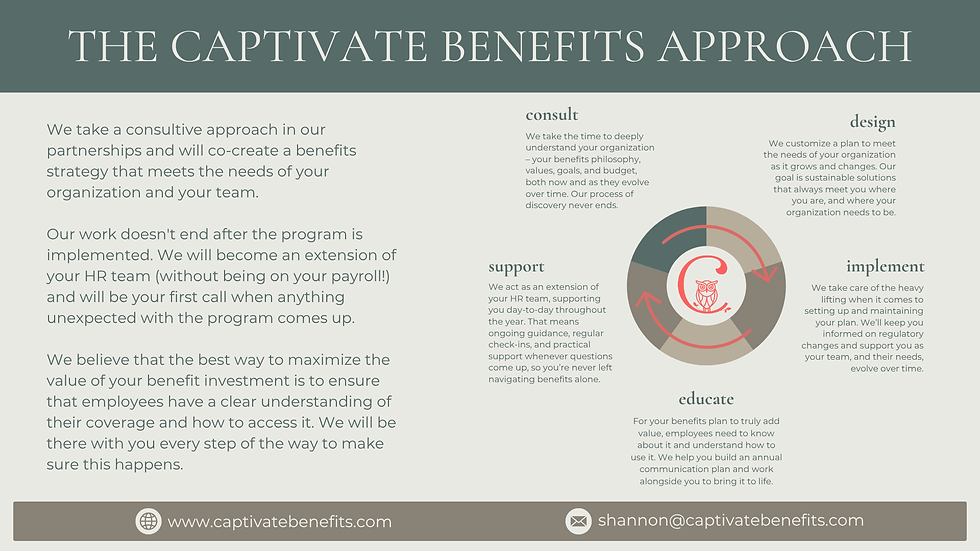
At Captivate Benefits, we take a consultative approach in our partnerships and co-create benefit strategies that meet the needs of your organization and your team. Our work doesn't end after the program is implemented, nor do we only show up at renewal time. We become an extension of your HR team (without being on your payroll!) and will be your first call when anything unexpected with the program comes up - all year long. We believe that the best way to maximize the value of your benefit investment is to ensure that employees have a clear understanding of their coverage and how to access it and that plan administrators have the help they need to effectively support their employees. We are there with you every step of the way to make sure this happens.
Benefits aren't just about what employees need at renewal time, they're about supporting people throughout the entire year. Employees grow, change, and move through different life stages. Workplace challenges shift. Organizational priorities evolve. A benefits strategy should do the same. The most supportive plans aren't usually built during a few weeks of renewal discussions each year; they're built through ongoing listening, learning, and adapting - all year long.


Comments